Conspiracy wahrheit book.., p.1
Conspiracy: Wahrheit Book 1, page 1
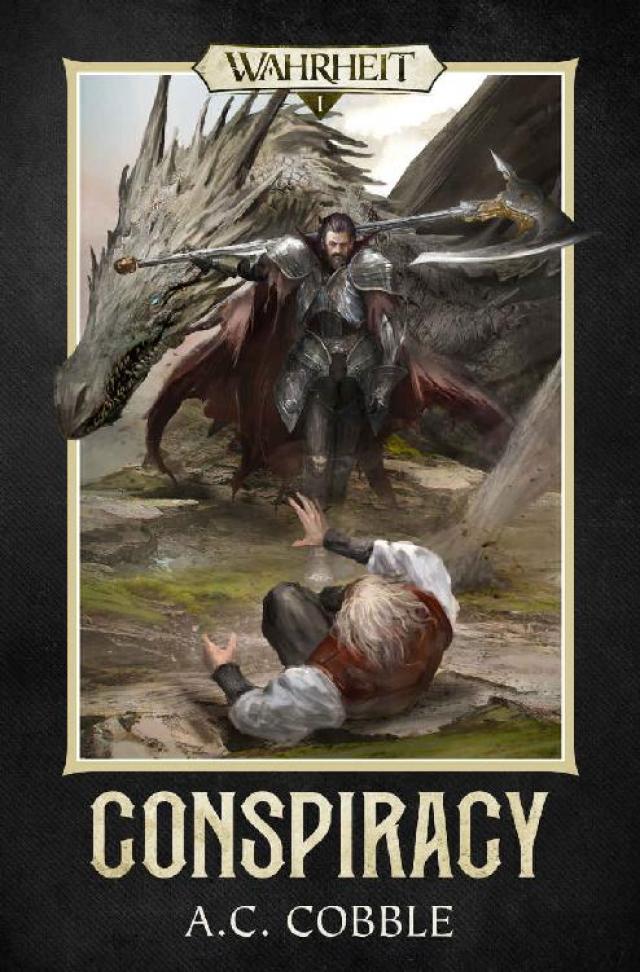


CONSPIRACY
Wahrheit Book 1
AC COBBLE
CONSPIRACY text copyright
© 2022 AC Cobble
ALL RIGHTS RESERVED
Hardcover ISBN: 978-1-943363-42-1
Paperback ISBN: 978-1-943363-43-8
Cobble Publishing LLC
Sugar Land, TX
Contents
Keep in Touch and Extra Content
1. Death of a King
2. The Boy I
3. The Girl I
4. The Boy II
5. The Spy I
6. The Captain I
7. The Premier I
8. The Quartermaster I
9. The Queen I
10. The Boy III
11. The Captain II
12. The Girl II
13. The Quartermaster II
14. The Boy IV
15. The Emperor I
16. The Boy V
17. The Girl III
18. The Spy II
19. The Pirate I
20. The Quartermaster III
21. The Premier II
22. The Boy VI
23. The Girl IV
24. The Spy III
25. The Captain III
26. The Boy VII
27. The Premier III
28. The Girl V
29. The Quartermaster IV
30. The Boy VIII
31. The Emperor II
32. The Captain IV
33. The Quartermaster V
34. The Spy IV
35. The Boy IX
36. The Spy V
37. The Premier IV
38. The Captain V
39. The Girl VII
40. The Boy X
41. The Girl VIII
42. The Captain VI
43. The Boy XI
44. The Girl IX
Thanks for Reading!
Keep in Touch and Extra Content
Whether a long time fan or someone new to my work, you can find out about my previous books and a better map at: accobble.com.
I also have (really good) series artwork, writing news, and you can sign up for my newsletter to receive dozens of free short stories. Unsubscribe at any time, but I send less than an e-mail a month, and it’s the best way to stay updated. See you soon!
-AC
Death of a King
“He died in his sleep,” mentioned the little old man. He was looking down, speaking into the back of his hand, trying to whisper. His voice sounded like old stone or old ideas.
Beside him, a woman, tiny and wrinkled like a raisin, smiled at the scene below. She replied, “How quaint.”
The two of them, high in a third-level gallery overlooking the expansive floor of the throne room, stood several steps back from the intricately carved balustrade so they stayed hidden within the deep shadows. They observed the proceedings below patiently. They’d seen this procession before. It was always the same. The procedure had been refined and reinforced over the centuries until it was a dance with known steps, as if to drain both the joy and the sorrow from the moment.
Atop a dais at the opposite end of the room, a man was stretched along a cold, marble bier. It’d been brought there with some effort, temporarily replacing the hulking throne which normally occupied the position. The throne was set back behind the bier on a raised platform, which had been constructed for the occasion then covered in heavy, burgundy-colored velvet. The throne was massive, made of dragon bone, carved and assembled by the magic of the fae.
It must have been a chore to move all of it, but people had always done a lot of work for this man and his ancestors.
He was clothed in the finest silk, velvet, and ermine, though everyone knew he’d spent much of his life eschewing such luxuries. It had been rare to catch him wearing something other than a cotton tunic with the sleeves rolled up, a wool vest covering it, sensible trousers, and boots. Though he wore steel when the occasion called for it.
His beard was neatly trimmed, also unusual. A gleaming, golden crown had been set atop his head, but it’d fallen due to his supine position. Gemstones were set within the burnished metal, and even tilted as they were, they sparkled like stars in the light of the torches hanging from the columns that bounded the dais. More of the precious gemstones were strung around the man’s neck and somehow forced onto his swollen fingers. A scepter lay across his chest, fashioned of pure gold, worked into the shape of a flowering stem, and capped with the largest ruby that was known to exist.
Behind the body, against the back wall near the throne so the endless procession of mourners could witness it as they circled the bier, was the man’s coffin. It was a large, imposing bronze box adorned with fanciful ornamentation. It was meant to depict the dead king’s interests, though if he’d known what it looked like in life, he would have hated the thing. Skeletal figures, the skulls capped with crowns, held the corners with arms of bare bone. His family crest commanded one side, along with a motto about the power of truth. The words were inscribed over a crossed spear and a sword. The king might have appreciated that bit. He had been a believer in the power of the truth and of spears and swords. Atop the casket was the statue of a dragon, shrunk down to the size of a pony. It seemed to crouch there, protecting its charge within as its kind had protected his kingdom.
Branching candelabras sprouting thousands of candles were the only other light, set in alcoves behind the columns and their torches, so that the candles’ warm glow suffused the rest of the room without being bright. The tall, arched windows had been draped with black cloth, strangling the daylight that normally would have filled the huge space. The proceedings were bathed in the yellow and orange of fire. The low light was meant to evoke a somber ambiance, or perhaps hide the sickly pallor of the man’s skin.
He’d died in his sleep. That was the truth. The pair standing in the shadows on the third-tier gallery knew it for fact, though they could hardly believe it. They had a sense for these things and could tell the manner of a man’s death. They might not have accepted the truth otherwise. Others in the kingdom had not believed, despite no evidence it should be any other way. People were like that, reluctant to accept truth if it came without a story.
There should have been a story.
The king had lived sixty-five healthy winters. His end should have been grand, exciting. His death ought to have been the result of an epic battle or a daring assassination, a terrific accident, a rare disease. Those were the sorts of stories men wanted to tell. Reading late into the evening, going to bed, and never getting up was boring. The king had never been boring. Why was his death?
The little old man in the gallery tapped a tall wooden staff on the floor and said, “I didn’t see it coming. Did you?”
The woman beside him didn’t answer.
When most men of sixty-five winters died, a wife if he had one who lived, children, siblings, lovers, and friends might all trickle in, standing in a silent queue, paying their respects. They would express regret and surprise. Perhaps many would mean it, and most would leave and live their own lives, forgetting about the dead man except when slightly drunk, then raising a toast if he frequented the tavern they sat within or if it was a holiday. His closest family would miss his income, if he had any, or even his company, in a few rare and fortunate cases.
But the king was not most men.
The passing of most men was an unremarkable thing. Everyone died, after all. It meant something to one or two people, a handful of people if you were lucky, but to the world, it meant nothing at all.
But the king’s passing would change the world.
He’d been the ruler of the Kingdom of Wahrheit, named after his ancestor who had brought five disparate lands together through fire and blood and a bargain, over six hundred years prior. Since then, the House of Wahrheit had ruled as peacefully as a kingdom built on the strength of arms, steel, and magic could be ruled.
Long ago, the subjects of Wahrheit had forgotten they were once different peoples. They were of the kingdom now, and few of them thought ill of it. Wahrheit was powerful and prosperous. The kings had protected the borders and tamped down on internal conflicts quickly. Trade flourished, wealthy men grew wealthier, and even poor men had a chance at a decent life for their families. The kingdom was safe. Life within it was good.
Forty-three kings of the dead man’s family had ruled in a continuous line. The eldest son had inherited the throne, though more than one younger brother had taken it after unexpectedly becoming the eldest. Those small complications had meant little, outside of the small groups on the high council and privy council. The rulers of Wahrheit had been vigorous, virile, always siring a whelp of children, with a multitude of heirs for when Fortune’s Curse frowned upon them—which was often, it should be noted. In recent centuries, they had ruled with the confidence of a royal lineage that had never faced a challenge they could not overcome.
Until now. Until this king.
His first wife had died in childbirth some thirty-five years before. She’d been young, far too young, but he’d loved her. Loved her more than was good for her, as she’d passed shortly after her sixteenth winter, and now it seemed, he had loved her more than was good for the kingdom as well. Several other wives had been foisted upon the king, but none of them had produced an heir.
Forty-three kings. Six hundred years. And now the line had ended.
“Well, they ruled longer than most royal families, didn’t they?” The old man, standing three floors above the p
Being shackled by such strictures would grate on him other times, but now, they had more important concerns. The king was dead. The landgraves, the rulers of the five provinces that had been brought together by Wahrheit’s kings, were eyeing each other like a pack of dogs circling one thick, juicy cut of meat.
To the east, the King of Clermont had already sent his regards along with a thin, narrow-nosed diplomat, who was part of the proceedings below. How the sly fox in Clermont had heard so quickly and managed to dispatch his dour-faced representative was beyond anyone’s guess, even that of the man and the woman high up in the dark gallery. There’d been rumors that Clermont had been the cause of the king’s death, but they knew that wasn’t the case. No, Clermont’s presence was a more opportunistic sort of politics.
What the old man with the staff wanted to know was what Clermont’s representative had been saying to the landgraves. The diplomat from Clermont had won a personal audience with Landgrave Leland Laurent the day prior. What had the two of them to speak of? Nothing good. Certainly nothing good at all.
Diplomats from the other kingdoms that shared the northern continent would be on the way. There would be weeks of mourning, conferences, and parties, but evidently, the other rulers did not have as close information as Clermont. They didn’t have Clermont’s ambitions, either.
In a long, silent line, the procession below continued. They would all agree over feasting tables and sparkling goblets of wine the death of the king was unfortunate, an accident that occasionally befalls those in later years who partake in rich food and too much drink, with too little exercise to counterbalance it. A terrible tragedy, a reminder of nature’s inevitable call home.
They would say those things and, for the most part, would mean them. The king had been fair. Not even the highest and most ambitious lords in his realm would argue that. They might have hated the taxes his government charged or the expectations he had for them, but none of them hated the man himself.
What they wouldn’t speak aloud—not yet—was that the man had no son. Always, leadership of Wahrheit had passed from father to son. Never, in six hundred years, had the succession been in doubt. Some must understand. They would see it was not so simple as the high council simply swapping the crown to another head. Some would already be maneuvering behind closed doors to take advantage of the situation, but the little man in the gallery believed that for most, the interest in the occasion was the salacious drama of the king’s passing rather than consideration of what it all meant for the future.
The future was all he and the woman beside him cared about.
There’d been rumors about the king. Perhaps he was impotent. Perhaps he did not enjoy the company of a woman, despite his obvious love of his first wife. There had been rumors about his latest wife as well. Perhaps she’d exhausted the old man in a valiant attempt to secure his family’s legacy. That story was everyone’s favorite. Equally as scandalous was the insinuation the queen had been part of some dark plot to bring her husband low. What anyone thought the poor girl would gain from such a scheme was a mystery. In the span it took to miss a score of breaths, for a heartbeat to fail, she’d gone from being one of the most powerful women in the kingdom to a terrific threat to whoever managed to take the throne.
For those who truly understood the ways of politics and power, her fate at least, was known. Unless… The old man had determined she was not with child. Like the nature of a man’s death, he had a knack for sensing these things. Her maids would know she still bled. Would anyone else? What if she managed to become pregnant quickly? People understood the length of these things, but on the other hand, who would doubt the word of the queen if she claimed it happened the night of the king’s death?
That was a story people would love. Whether or not they believed it, they would tell it, and eventually it’d be their truth.
The old man in the gallery had voiced his concerns to the old woman beside him, but she’d casually dismissed them. She had a way of doing that and a sense of things much like he did. The holy mother was not one to worry.
Still speaking low so there was no chance the participants in the funeral below would hear him, the old man continued, “Cojita will take advantage of this, you know. Emperor Honxul has a voracious appetite, and Wahrheit is the fattest prize on the continent. He’ll march north. Within a few short years, he’ll be at the gates of this city. Can we trust the landgraves to remain strong, to fight as allies?”
The holy mother’s expression did not change, and she did not reply. Her eyes, reflecting the torchlight below, stayed fixed on the body of the king.
The old man gripped his staff tightly, the familiar wood smooth against his palms. He ran his hands up and down the ancient shaft, confident after so many years with the artifact that there were no splinters left to skewer him. If only the rest of the world came with such assurance. He cleared his throat and declared, “Andorra will not hold. Merteuil, something must be done.”
“Do not use that name.”
He snorted, the blast of breath threatening to echo down below. He glanced at her from the corner of his eye and let the question hang.
The woman beside him remained quiet. Below, they heard the shuffle of slippered feet dragging over marble, the swish of expensive fabric, and the crackle of starched linen as each mourner made their way through the throne room to pay respects to the dead king.
Finally, long after the high council, the privy council, and the diet of lords had passed, the burgher council was filing through. Some pretentious church official appeared to be encouraging them to hurry, but there were a lot of the commoners, and few would ever have had the chance to process through these august halls before. They were going to take their time and remember the moment. Amongst the burghers, the guild masters, the merchants, and the others who were still stretched out the throne room, down the hall, and onto the lawn before the palace, there were few who would recognize the man and the woman in the gallery.
But still, it was safer to remain hidden. Observers might not know who they were, but a few down there could tell what they were.
The old woman finally spoke again. “The church feels the threat to the kingdom is a serious one and that you are correct; the Empire of Cojita will not be satisfied with their present borders. Andorra is not likely to resist for long, and Honxul’s eyes will remain north. We know as do you what is behind his hunger. His appetite will not be sated until Wahrheit is fallen, and he roosts in this land like a vulture. A god, he believes, protects him. Bah. Can you imagine, believing one of those things is a god?”
The old man tapped his staff on the floor again and said, “Yes, I can.”
The old woman scowled at him.
“The church feels,” growled the old man in exasperation. That one was loud enough it threatened to draw the attention of those below. “The church feels, but what will the church do?”
“You and I know why Honxul wants these lands and who’s blood he’s been told to slurp, but few others know. Let us keep it that way. For now, he’s an emperor and a young man, and everyone knows young emperors are forever grasping. I will arrange for an appointment with Premier Sigismund. It is time the two of you met. I’ll inform him you have the church’s blessing and impress on him the need to locate and name a successor to the throne. Wahrheit requires stability for the challenges ahead.”