3001: The Final Odyssey

3001: The Final Odyssey

Arthur C. Clarke

Science Fiction & Fantasy / Science

One thousand years after the Jupiter mission to explore the mysterious Monolith had been destroyed, after Dave Bowman was transformed into the Star Child, Frank Poole drifted in space, frozen and forgotten, leaving the supercomputer HAL inoperable. But now Poole has returned to life, awakening in a world far different from the one he left behind--and just as the Monolith may be stirring once again . . .
Read online
  • 938
Prelude to Space

Prelude to Space

Arthur C. Clarke

Science Fiction & Fantasy / Science

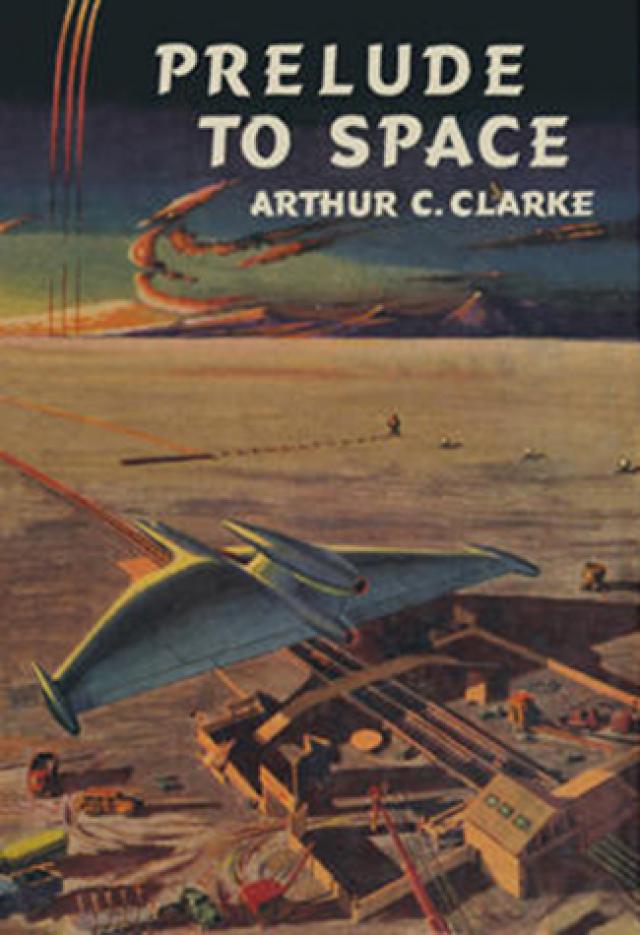
Here is the compelling story of the launching of Prometheus -- Earth's first true spaceship -- and of the men who made it happen. Dirk Alexson: Chronicler of the greatest space adventure of all time, he was chosen to immortalize the incredible story of the men and their heroic mission. Sir Robert Derwent: Direct-General of Interplanetary -- London Headquarters for the international space-flight project -- he was the man who got the mission off the ground and into the pages of history. Professor Maxton: The world's leading atomic engineer, he designed the huge ship's drive units and he waited with the rest of the world to see if the project would be a success.
Read online
  • 908
The Lost Worlds of 2001

The Lost Worlds of 2001

Arthur C. Clarke

Science Fiction & Fantasy / Science

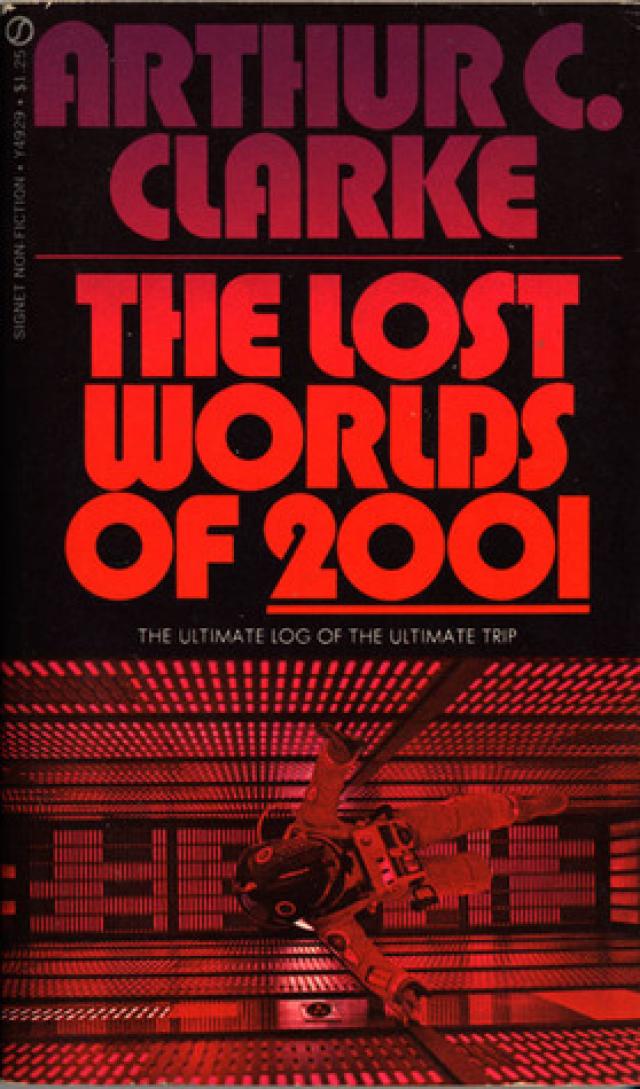
The Lost Worlds of 2001 by Arthur C. Clarke was published in 1972 by Signet as an accompaniment to the novel 2001: A Space Odyssey. The book itself consists in part of behind-the-scenes notes from Clarke concerning scriptwriting (and rewriting), as well as production issues. The core of the book, however, is contained in excerpts from the proto-novel and an early screenplay that did not make it into the final version. Alternative settings for launch preparation, the EVA scene where astronaut Frank Poole is lost, and varying dialogues concerning the HAL 9000 unit are all featured in the book. Also included is the original short story The Sentinel on which 2001 is loosely based.
Read online
  • 822
Tales From Planet Earth

Tales From Planet Earth

Arthur C. Clarke

Science Fiction & Fantasy / Science

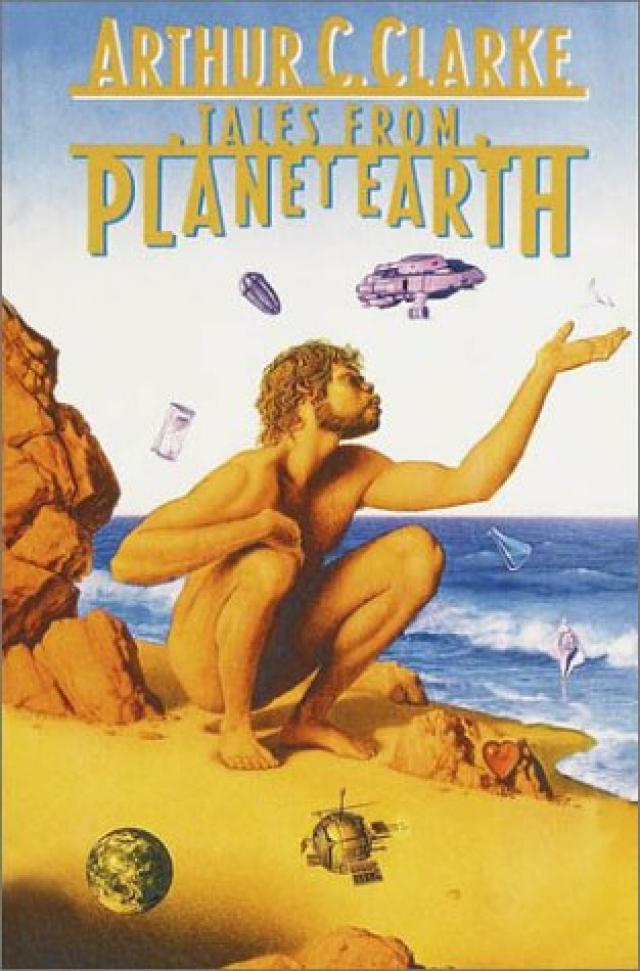
If you want an omnibus of short fiction by Arthur C. Clarke, a Science Fiction Writers of America Grand Master, then you want The Collected Stories of Arthur C. Clarke. If you're looking for a representative sample of Clarke's short stories, or for some examples of the creative and extrapolative abilities that established Clarke as one of science fiction's greatest and most important writers, then check out Tales from Planet Earth. Tales from Planet Earth ranges widely across time, but the stories are centered on our home world. Many SF writers confine their visions of earth to its flatlands, but Clarke is three-dimensional; his stories "Hate," "The Deep Range," and "The Man Who Ploughed the Sea" plunge into the ocean, while "The Cruel Sky" ascends the Himalayas. Some stories, like "The Other Tiger" and "'If I Forget Thee, Oh Earth...'," end on chilling twists. "The Road to the Sea" spans centuries and millennia to explore how humanity's exodus to the stars may affect the world left behind. "Hate" considers how transcendence of the Earth's atmosphere may affect ancient enmities. "The Parasite" demonstrates a scary nastiness not usually associated with Clarke. "The Wall of Darkness" is set on an alternate-universe earth so different from ours, and "The Lion of Comarre" is set in a future so far away, that both stories feel like fantasy; but both are rigorously extrapolated from scientific theory. Two lighthearted entertainments, "The Next Tenants" and "The Man Who Ploughed the Sea," are from Tales of the White Hart. All of the stories in Tales from Planet Earth are recommended. The iBooks 2001 Anniversary Edition of Tales from Planet Earth collects 14 SF stories first published between 1950 and 1987, including the satire "On Golden Seas," which has "never before [been] collected in any Clarke book." --Cynthia Ward
Read online
  • 784
2061: Odyssey Three

2061: Odyssey Three

Arthur C. Clarke

Science Fiction & Fantasy / Science

Arthur C. Clark, creator of one of the world's best-loved science fiction tales, revisits the most famous future ever imagined in this NEW YORK TIMES bestseller, as two expeditions into space become inextricably tangled. Heywood Floyd, survivor of two previous encounters with the mysterious monloiths, must again confront Dave Bowman, HAL, and an alien race that has decided that Mankind is to play a part in the evolution of the galaxy whether it wishes to or not. --This text refers to an out of print or unavailable edition of this title.
Read online
  • 781
Tales From the White Hart

Tales From the White Hart

Arthur C. Clarke

Science Fiction & Fantasy / Science

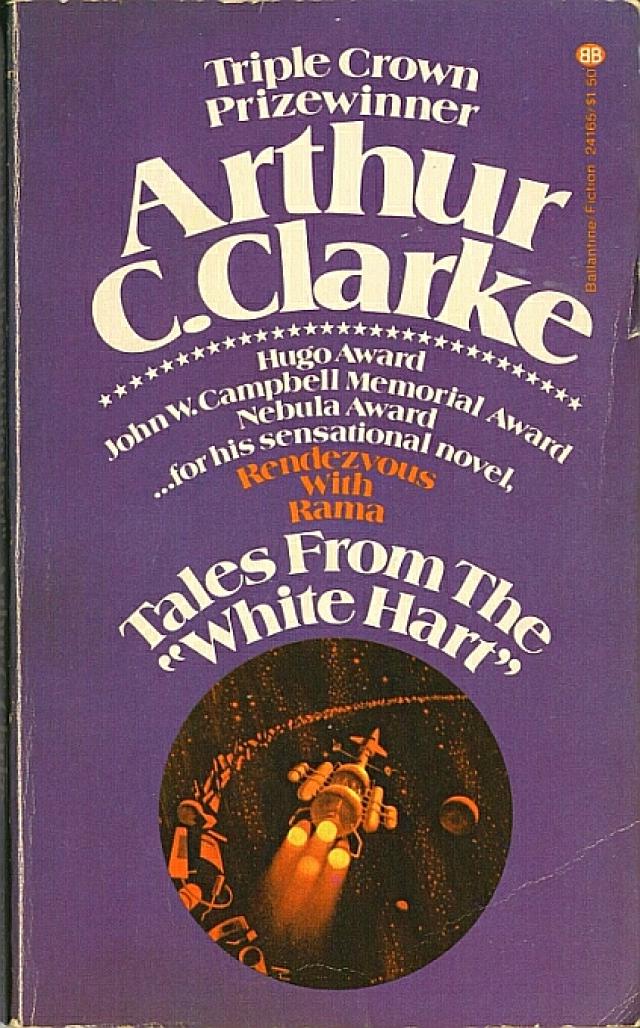
From outside it was simply an ordinary looking London pub, a place you'd have to be guided to more than once before you memorized it's location, somewhere between Fleet Street & the Embankment. But, if by chance, an insider led you to the White Hart on a Wednesday night, you would have found yourself in the midst of a select gathering or writers, editors, scientists & interested layman--drinking, swapping odd bits of information, &, like as not, listening to Harry Purvis' memorable stories. A scientist by profession, Harry Purvis has had or heard about some of the most astonishing experiences--like the story of the carnivorous orchid that was used in a murder plot, or the one about the military computer that was converted to pacifism. There's SILENCE PLEASE, involving a spurned lover & a device that was supposed to destroy sound; & BIG GAME HUNT, in which an ambitious researcher becomes so wrapped up in his latest projest--controlling animal behavior with electrical impulses-- that he overlooks one tiny important detail. Such stories may challenge your powers of logic & strain your imagination. Yet even if you doubt their veracity, they're guaranteed to provide you with hours of SF reading. Baron Munchausen, step aside. Contains: Silence Please; Big Game Hunt; Patent Pending; Armaments Race; Critical Mass; The Ultimate Melody; The Pacifist; The Next Tenants; Moving Spirit; The Man Who Ploughed the Sea; The Reluctant Orchid; Cold War; What Goes Up; Sleeping Beauty & The Defenestration of Ermintrude
Read online
  • 772
Firstborn

Firstborn

Arthur C. Clarke

Science Fiction & Fantasy / Science

The Firstborn–the mysterious race of aliens who first became known to science fiction fans as the builders of the iconic black monolith in 2001: A Space Odyssey–have inhabited legendary master of science fiction Sir Arthur C. Clarke’s writing for decades. With Time’s Eye and Sunstorm, the first two books in their acclaimed Time Odyssey series, Clarke and his brilliant co-author Stephen Baxter imagined a near-future in which the Firstborn seek to stop the advance of human civilization by employing a technology indistinguishable from magic. Their first act was the Discontinuity, in which Earth was carved into sections from different eras of history, restitched into a patchwork world, and renamed Mir. Mir’s inhabitants included such notables as Alexander the Great, Genghis Khan, and United Nations peacekeeper Bisesa Dutt. For reasons unknown to her, Bisesa entered into communication with an alien artifact of inscrutable purpose and godlike power–a power that eventually returned her to Earth. There, she played an instrumental role in humanity’s race against time to stop a doomsday event: a massive solar storm triggered by the alien Firstborn designed to eradicate all life from the planet. That fate was averted at an inconceivable price. Now, twenty-seven years later, the Firstborn are back. This time, they are pulling no punches: They have sent a “quantum bomb.” Speeding toward Earth, it is a device that human scientists can barely comprehend, that cannot be stopped or destroyed–and one that will obliterate Earth. Bisesa’s desperate quest for answers sends her first to Mars and then to Mir, which is itself threatened with extinction. The end seems inevitable. But as shocking new insights emerge into the nature of the Firstborn and their chilling plans for mankind, an unexpected ally appears from light-years away. From the Hardcover edition.
Read online
  • 682
The Wind From the Sun

The Wind From the Sun

Arthur C. Clarke

Science Fiction & Fantasy / Science

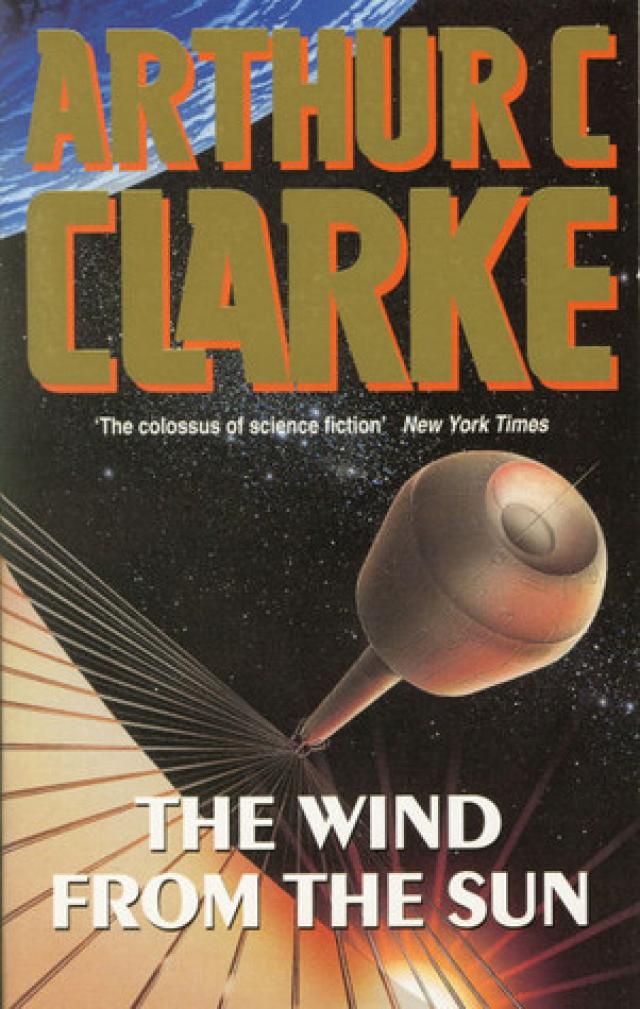
A volume containing all 18 short stories written by Arthur C. Clarke in the 1960s. They depict a future in which technologies are beginning to dictate man's lifestyle - even to demand life for themselves. Contents vii • Preface (The Wind from the Sun) • (1972) • essay by Arthur C. Clarke 3 • The Food of the Gods • (1964) • shortstory by Arthur C. Clarke 8 • Maelstrom II • (1965) • shortstory by Arthur C. Clarke 24 • The Shining Ones • (1964) • shortstory by Arthur C. Clarke 43 • The Wind from the Sun • (1964) • novelette by Arthur C. Clarke 65 • The Secret • (1963) • shortstory by Arthur C. Clarke 71 • The Last Command • (1965) • shortstory by Arthur C. Clarke 74 • Dial "F" for Frankenstein • (1965) • shortstory by Arthur C. Clarke 82 • Reunion • (1971) • shortstory by Arthur C. Clarke 84 • Playback • (1966) • shortstory by Arthur C. Clarke 88 • The Light of Darkness • (1966) • shortstory by Arthur C. Clarke 95 • The Longest Science-Fiction Story Ever Told • (1966) • shortstory by Arthur C. Clarke 96 • Herbert George Morley Roberts Wells, Esq. • [Editorial (If)] • (1967) • essay by Arthur C. Clarke 99 • Love That Universe • (1961) • shortstory by Arthur C. Clarke 103 • Crusade • (1968) • shortstory by Arthur C. Clarke 108 • The Cruel Sky • (1967) • shortstory by Arthur C. Clarke 129 • Neutron Tide • (1970) • shortstory by Arthur C. Clarke 131 • Transit of Earth • (1971) • shortstory by Arthur C. Clarke 146 • A Meeting With Medusa • (1971) • novelette by Arthur C. Clarke
Read online
  • 679
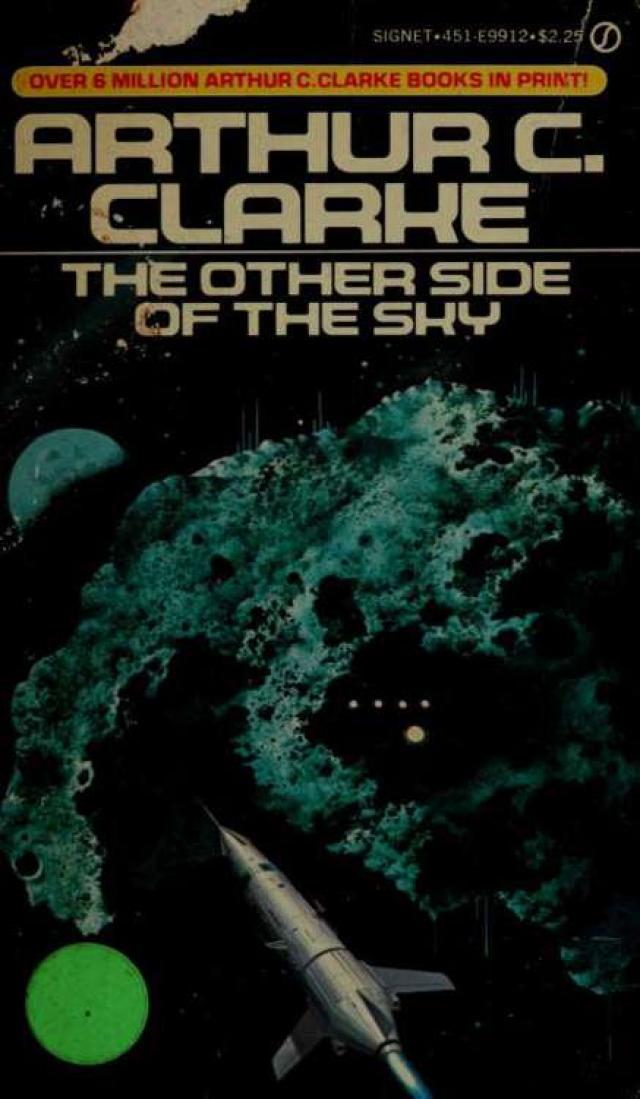
The Other Side of the Sky

The Other Side of the Sky

Arthur C. Clarke

Science Fiction & Fantasy / Science

The Other Side of the Sky presents a glimpse of our future: a future where reality is no longer contained in earthly dimensions, where man has learned to exist with the knowledge that he is not alone in the universe. These stories of other planets and galactic adventures show Arthur C Clarke at the peak of his powers: sometimes disturbing, always intriguing.
Read online
  • 590
The Deep Range

The Deep Range

Arthur C. Clarke

Science Fiction & Fantasy / Science

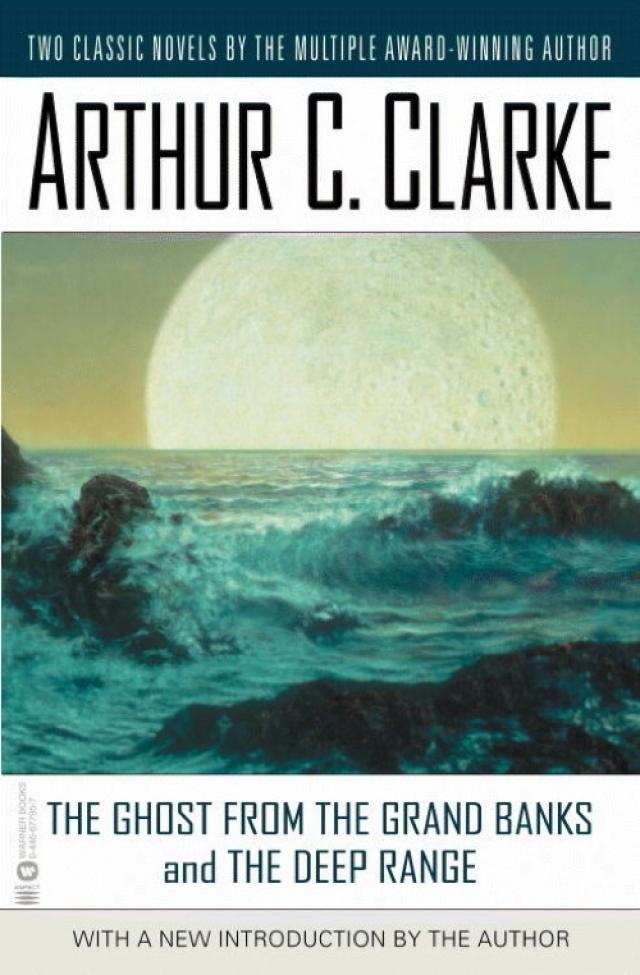
The Deep Range is a 1957 Arthur C. Clarke science fiction novel concerning a future sub-mariner who helps farm the seas. The story includes the capture of a sea monster similar to a kraken. It is based on a short story of the same name that was published in April 1954, in Argosy magazine. The short story was later featured in Tales from Planet Earth and Frederik Pohl's Star Science Fiction No.3. References Tuck, Donald H. (1974). The Encyclopedia of Science Fiction and Fantasy. Chicago: Advent, 101. ISBN 0-911682-20-1.
Read online
  • 581
The Light of Other Days

The Light of Other Days

Arthur C. Clarke

Science Fiction & Fantasy / Science

Big Brothers Are Watching Legendary science fiction icon Arthur C. Clarke, who in recent years has cowritten The Trigger with Michael Kube-McDowell and several Rama novels with Gentry Lee (Rama II, Garden of Rama, Rama Revealed) collaborates here for the first time with British author Stephen Baxter (Moonseed, Voyage, Titan, and Manifold Time) on a powerful, near-future speculative story of our world on the brink of radical change. The authors envision what the social consciousness and culture shock of life would be like when all privacy is irrevocably gone. Driven by Clarke's vision and fleshed out by Baxter's easygoing narrative, The Light of Other Days is intriguing conjecture supported by deep-seated principles in a time when total indifference has taken root. In the early 21st century, industrialist Hiram Patterson isn't content with his multimedia conglomerate called OurWorld and dedicates himself to further innovation. While attending an OurWorld event, journalist Kate Manzoni prepares to break a major story on Hiram's latest invention, which is shrouded in secrecy. Her previous cutting-edge bit of news was the disclosure of the Wormwood, a comet which is set on a collision course with Earth and destined to destroy all life on the planet in 500 years. Drug use, suicide, and apathy are at an all-time high across the globe. Still, that doesn't stop Hiram from doing what he does best: making money off scientific breakthroughs. His latest invention, as Kate learns, is a "WormCam": a stabilized wormhole of atomic size that is only large enough to send a radio signal through. His next call of order is to enlarge the wormhole until it is big enough to allow for visual images. Hiram's long-abandoned son, David, a top physics scientist and devout Catholic, is called back to OurWorld in order to oversee the WormCam project. The debonair Bobby Patterson, Hiram's younger son, is soon wooing Kate even while she uses him to get closer to Hiram's secrets. Bobby learns that the brain implant he had embedded as a child was actually designed to make him lack emotion and religious faith, as well as allow him to be easily coerced by his father. When Kate helps him to shut down the implant, Bobby is opened to a whole new world of exquisite love, anger, and pain. Eventually his brother David enlarges the WormCam until visual imagery is capable of traveling back and forth. David also determines that the WormCam is not only capable of bending space, but also time. As Kate uses the WormCam in an attempt to take down a notorious religious leader who uses a deadly form of virtual reality on his followers despite its ill effects, she begins to make herself powerful enemies, among them Hiram. Bobby and Kate set out on personal missions intended to keep the wormholes out of the wrong hands and put them to use for mankind's benefit. However, that's easier said than done, as government agencies and corporate competitors learn of the invention and a chain reaction is started -- everyone spying on everyone else across the globe and across time. Stephen Baxter deserves all the praise he's received in recent years for his thought-provoking and evocative novels. As a winner of the John W. Campbell Award, Baxter again proves he has what it takes to hold his own with such a visionary as Arthur C. Clarke. The authors are at ease fusing their ideas and techniques, moving between the hard-science elements and the credible, emotionally dense circumstances propelling the characters forward. The constant tension between Hiram, Kate, and Bobby is put to wonderful use, as Bobby sees life for the first time with an open soul. Possibly the strongest scene comes when Hiram realizes the WormCams can look backward into time. He turns a challenging gaze to the heavens for all the future watchers staring at him to see. As the world undergoes extreme change and privacy is done away with, our protagonists are forced to take personal stands for their beliefs despite all the conflict taking place around them. This is made even more difficult for them by the ever-present threat of the Wormwood comet that will eventually decimate all life. The theme is a strong one: How hard will you strive for your ideals when the world is going to end in the not-so-distant future? How strong is your faith? Clarke and Baxter have given us a moving and believable story, bringing together various scientific threads and philosophical ideology. They not only grab the reader's interest but also fire one's imagination on how technology leads to radical social and political change. The Light of Other Days doesn't sink under the inertia of the secular debates in the novel: Clarke and Baxter's unraveling of the intense subplots of faith and fear is impeccable. It's rare to find authors so cognizant of cultural transformation, who understand the ethical dilemmas that influence a world on the edge of upheaval in the name of progress. This is an enthralling inquiry into the effects of a major scientific breakthrough on values and belief systems; it will draw the reader into the brilliant light of powerful storytelling. —Tom Piccirilli
Read online
  • 542
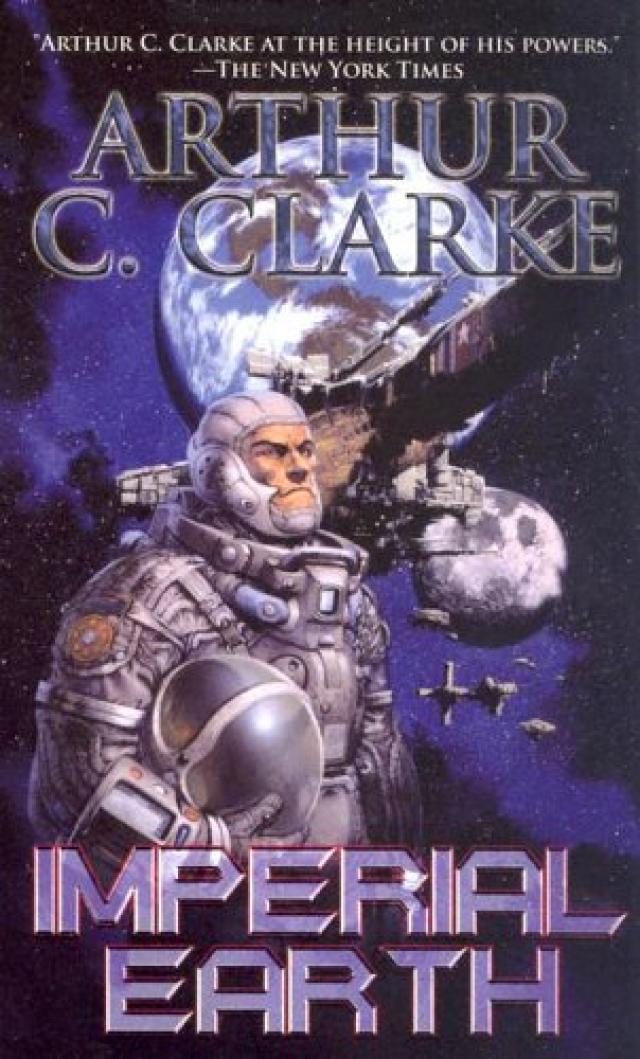
Imperial Earth

Imperial Earth

Arthur C. Clarke

Science Fiction & Fantasy / Science

Imperial Earth is the fascinating odyssey of Duncan Makenzie, traveling from Titan, a moon of Saturn, to Earth, as a diplomatic guest of the United States for the celebration of its Quincentennial in the year 2276. Titan, an independent republic, was originally colonized from Earth three generations earlier. Duncan's initial challenge is to prepare, physically and intellectually, for the 500-million-mile trip to Earth. Once there, he is caught up in a sweep of new experiences, including the social and political whirl in Washington, a strange visit to a carefully preserved ancient city once prominent in the 20th century, and a search for and meeting with a woman he loved since she visited Titan years before.
Read online
  • 491
183