Encyclopedia of the unde.., p.31
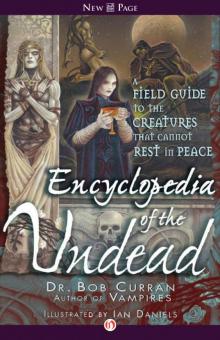
Encyclopedia of the Undead, page 31


The Universal Friends
One of the more radical of them was the Universal Friends—the followers of the prophetess Jemima Wilkinson, who flourished in Rhode Island between 1776 and 1789. Wilkinson who had been born into a Quaker family in Cumberland, Rhode Island (she was the eighth child), was considered to be “touched by the spirit” which enabled her to see visions and make prophesies. By 1776, she had rejected the plain style of worship pursued by the Quakers and had joined a more “charismatic” Puritan congregation at nearby Abbott Run. In the year of the Revolution, Jemima’s elder sister, Patience, bore an illegitimate child and was expelled from the Quaker congregation as were her two brothers who had volunteered for military service in the American army. They joined her and shortly after began to experience ecstatic visions themselves. Later they would be joined by other members of the family including her father. In the latter half of that same year, Jemima contracted an “illness” during which her visions increased. She claimed to have been visited by two archangels who revealed “wonderful secrets” to her and also announced that the End of the World was fast approaching. She also claimed to have seen her own soul ascending into Heaven. This made her a “seeress” and a “prophet of the Last Days” and gained her a good number of converts. New branches of her sect appeared in South Kensington and New Millford in the early-to-mid 1780s. The prophetess herself urged celibacy and drew up rules for day-to-day living such as the preparation of food, dress, personal hygiene, and demarcation between the sexes in indoor and outdoor labour. Her influence grew steadily, bringing with it a tradition of seeing visions and of hearing voices, extending even beyond the borders of Massachusetts. Her sect drew the “spiritually lost” (a title in which she revelled), people who didn’t really fit into any other religion but who gloried in visions and “miracles.” Some even claimed to have “esoteric knowledge” granted to them by angels. By the time Jemima Wilkinson died in 1819, her visionary church was well established with congregations operating as far away as Philadelphia. There was even a small settlement of them in the Seneca Lake region of New York State. However, the Universal Friends did not long survive the prophetess’s death and split in acrimony and division to be absorbed by other religions. Even the Seneca Lake settlement collapsed and was gone within a decade. The church that she had founded and which had briefly flourished in New England had nevertheless left behind a tradition of mysticism and supernatural experiences that tinged the fundamentals of religion in Rhode Island and many other New England colonies, and it is this aspect of which Lovecraft may well have been aware.
Samuel Sewell
Following in the tradition of Jemima Wilkinson were the followers of Samuel Sewell, a cobbler from Concord, who shared his name with one of the judges in the Salem Witch Trials over fifty years earlier. “The Sewellites,” who flourished briefly in the 1780s, also saw visions and claimed to hear voices and sounds in the remote forest areas, which they interpreted as being the work of either angels of the Devil. They made reference to earlier civilizations that had brought down “great evil” upon America that the righteous must cleanse. Again after Sewell’s death at the end of the 1700s, the sect seems to have folded and nothing further is heard of it. Even so, it had established a tradition of ancient and malignant powers living in the deep woodlands, an idea which was to give Lovecraft one of his most persistent themes.
The Brethren of the New Light
Possibly the most bizarre of all the New England sects around this time was that headed by a pipe fitter from Charlestown—the Brethren of the New Light. In the days before the Stir, the Brethren had been influenced by the message of an itinerant Freewill Baptist preacher, Isaiah Parker, who would afterward become their minister. In the meantime the pipe fitter, Shadrach Ireland, answered their call and in 1755 organized a congregation in Charlestown, Massachusetts. However, his increasingly eccentric message began to alienate many of his followers who deserted to become Baptists under Parker. In response, Ireland’s message and behaviour became more and more bizarre. Around 1770, he abandoned his wife and announced a doctrine of “spiritual wifery” (“as the people of old”) by which he could choose “wives” from amongst his female disciples. He made his followers build him a large brick dwelling called The Square House where he lived with several of his “spiritual wives” and a retinue of female disciples. He proclaimed himself to be immortal through a secret knowledge that he had obtained directly from God and assured his followers that they, too could live forever if they scrupulously obeyed his edicts. He declared all his followers “perfect” and stated that those who appeared to die were not dead at all but resting and awaiting the Call on the Last Day when they would wake up, walk out of their tombs, and meet the Lord. To this end, bodies were not to be buried in graves or cemeteries but were to be placed in specially sealed, stone-lined tombs, constructed under the New England hills, where they would lie awaiting the Final Trumpet. Such places (and it is said that some of these chambers were indeed constructed) must have been almost like “dormitories of the dead” where rows of cadavers lay together.
As Ireland’s ministry grew more and more peculiar, many of his followers abandoned their own families and went to live with him in the Square House. Here they experienced ecstatic visions and heard the voices of angels and felt the touch of miraculous powers. In 1773, Ireland proclaimed himself blessed and immortal and shifted his church to a more apocalyptic vision, announcing that he was Christ’s herald and that the End of All Things was fast approaching.
Ireland’s congregation was to last roughly five more years. In 1777, exhausted by his prophetic visions, he began to “sicken” and took to his bed, stating that his earthly ministry was finished but that God had a far more glorious one waiting for him. He urged his disciples not to bury him, for the time was short. God was coming to take the Church. After his death in September 1778, his followers placed his body in a lime filled box where it reposed for six weeks before burial. His followers continued to occupy The Square House until around 1781 when the sect fell apart amid rancour and division. Many members were later absorbed into Mother Ann Lee’s Shakers. The concept of uncoffined bodies, however, representing immortals, lying somewhere under the New England hills was the stuff of nightmares and must have added a rather sinister note to the region.
The idea of vanished civilizations that had worshipped monstrous gods; of dark and forbidden books containing ancient mysteries; of reclusive communities who held strange beliefs and might follow even stranger ways and of odd religious sects who carried out questionable practices all drew together in much of Lovecraft’s fiction and in the stories of many of his adherents. Whilst charting the themes, which shaped his imagination, it is of course, easy to dismiss them all as mere superstition and as being without any real foundation. And yet the question remains—what if there was at least some grain of truth within them? What if Lovecraft had glimpsed some dark secret during his studies and what if there is something monstrous, lying just beyond the limits of the human mind—whose awful Presence is dimly suggested by various clues scattered across both history and folklore? The prospect is an unsettling one.
Perhaps the idea of Lovecraft and those similar to him is suggested by one of his earlier creations in his story The Music of Erich Zann (written in December 1921). In it the ancient, dumb musician sits alone in his garret room in the Rue d’Ausell, playing ceaselessly upon his viol whilst all around him great and inhuman shapes grow in the shadows and his narrow window reveals glimpses of strange and terrible other worlds. Perhaps this, more than any other is the abiding image of the strange recluse of Rhode Island and of those who would follow him.
Appendix:
Miscellaneous Nightmares
From the shadow by the fireplace and the shape on the heath, from the Devil in the lone bush and the spirit lurking by the head of the bed, O Lord protect us all.
—Ancient prayer
Although we are all familiar with the traditional terrors of the Undead—vampires, werewolves, zombies, and so on, other, perhaps less well-known horrors also lurk in the deepest recesses of our minds. These are not necessarily the unquiet spirits of the departed but are creatures that hold a quality of menace and the supernatural. Arguably, these beings do not strictly qualify as members of the Undead, because they have never been truly alive, and yet they exude an air of fear, that is normally associated with unquiet spirits.
Mara
We often describe such imagined monsters and our deepest fears as nightmares, but where does the word come from? “Nightmare” has its origins in a night creature in Germanic and Scandinavian folklore that was known as the Mara. Such a creature was greatly feared by all sleepers as it had the power to draw energy from the body and to greatly disturb the mind, inducing wild fancies and imaginings. In many ways, the Mara resembled the ancient incubi and succubi that tormented Roman sleepers. It could enter a room through the tiniest aperture—through a keyhole or in the space under a door. It would then settle, astride, on the chest of the sleeper and commence to ride him or her like a horse. He or she would experience foul and exhausting dreams, awaking feeling badly rested and often soaking with sweat.
Nordic Lore
In Nordic lore, the Mara was invariably a female wraith that only attacked sleeping men, disturbing their sleep and interfering with their manhood. She committed lewd and strenuous sexual acts, which left them feeling weak and ill when they eventually woke. She tormented them with awful visions and made them toss and turn as if in the throes of passion. In fact, some of them could die with palpitations of the heart as a result of the Mara attack. There was no real defence against the attack of the Mara except to spend some time in deep and earnest prayer before going to bed. Some of the old Norse sagas from around the 8th or 9th centuries speak of the demon and she is sometimes depicted as having the upper torso of a horse and the lower body of a naked woman. Indeed, it was commonly believed in both Norway and Denmark, that the Mara was the spirit of an actual living woman who had lived a wanton life and was troubled by her memories as she slept. Her spirit therefore roamed the countryside, attacking men where she could find them.
Buddhism
The name also appears, as a dubious force, in the Indo-Aryan dialect and is thought to have come from the East. In fact, Mara appears in Buddhist folklore is the name of a demon who tempted the Gautama Buddha (563–483 B.C.) by assuming the shape of a beautiful woman. The Buddha resisted her temptations but other, lesser, men were not so fortunate. Her name is usually used in Buddhist literature to signify the “death” of the spiritual life. In Buddhist folklore, she is often portrayed as the Lord of Evil, desirous of destroying Mankind in lewd and lustful ways.
Latvia
The Mara is also featured in Latvian mythology. Here she is a goddess—one of the higher deities of Latvian folklore. She sometimes appeared as a beautiful young woman and at other times as an aged crone and, in either guise, not always sympathetic towards Humankind. Once again, she could enter a room through the tiniest crack in order to disturb the sleep of those who were resting within a house or room. She drew energies from them whilst they slept and troubled their minds with strange and frightening dreams. In many ways, she resembled what we would today describe as a vampire. In order to placate this rather wilful deity, a special day was set aside in her honour—August 15th. In Christian Latvia, as the Church grained a firmer hold on the popular mind, this became the Feast of Mary, the Mother of Christ, thus Christianising what was essentially a pagan entity.
Orkney and Shetland
The Mara was greatly feared on the islands of Orkney and Shetland. These islands had been colonized by the Vikings and much of the Old Norse tradition still remain in these parts to this day. In the folklore of Orkneys, the Mara was essentially female and closely resembled a form of vampire. In some cases, she also took the form of a large black horse, threatened the sleeper with its hooves. However, she could be driven away with charms, amulets, and incantations, that would protect the sleeper. A lengthy charm from Shetland had to be repeated in its entirety (and sometimes had to be said twice or three times) before retiring for the night. It said:
De man o’ meicht,
He rode o’ nicht,
Wi’ nedder swird
Nor feard nor licht,
He socht da mare
He fund da mare,
He bund da mare,
Wi’ her ain hair,
An’ made her swear
By middin; meicht
Dat sho’ was never bide a nicht
What he had rod, dat man o’ meicht.
The notion of taking hairs from the hide or the tail of a supernatural creature is a very old one and appears in the folklore of a number of Celtic countries. In Ireland, the great hero-king Brian Boru (who was the only man even to ride the Pooka or Phouka a terrible horse-like creature with demonic powers) took three hairs from its tail and extracted a promise from it that it would never attack an Irish person again.
The Shetland Incantation was said over the cribs of newborn babies or over the beds of old people, both of whom were considered to be extremely susceptible to the Mara’s attentions. In fact, strands of red thread were also placed amongst the bedclothes because these were protections against the Scottish fairy kind (the Mara was not strictly considered to be a fairy but was believed to have certain fairy attributes about her)—and fairies and fairy creatures feared the colour red.
Gradually, the idea of the Mara—the succubus-like woman, the old hag, and the threatening horse—visiting sleepers during the hours of darkness, became incorporated into psychological terminology and was given as a description of disturbed and troubled sleep (in German the nacht mara or nightmare). Nightmares, of course, have troubled us ever since and who is to say that they are not the work of demons of some sort?
Viking Tales
Amongst the Vikings it was common to bury the revered dead, such as chieftains or great warriors within little “houses” or mounds, surrounded by his wealth and weapons. From time to time, the corporeal body of the dead chieftain or warrior could leave his funeral mound or “house” and roam the countryside. Such creatures were either described as hel-blar (death black) or na-foir (corpse pale) and retained their human shape. They were also very violent and often went about carrying some sort of weapon in their hands, which they would use to assault any humans whom they encountered. The creature would also attack any individual who attempted to break into their tombs or mounds with the intention of stealing its treasure.
Hromunde saga Gropssonar
Draugrs appear in many old Viking folktales and also in the great Northern sagas. The most famous of these is the Hromunde saga Gropssonar (The Saga of Hromond Gripsson), an ancient saga from Iceland. This tells the story of Olaf konugr-lioli (warrior king) who fights (amongst other foes) with the Witch King (or draugr), Brainn, who is an Undead king of Gaul (France) and whom he managed to defeat. The Saga was well known throughout the Nordic world and may well have influenced many other such tales. Some of these come, not from the Scandinavian world but from England where the Vikings held large swathes of the country and serve to show a connection between Norse and Germanic beliefs. One of these was the story of Thorolf Halt-Foot, which was to be found in the Eyrbyggia Saga, written down in a monastery in Iceland, probably around the middle of the 13th century. This records the story of a berserker who rose from his tomb each night and, with several Undead companions, ravaged much of the countryside of Western Iceland, attacking flocks of sheep and, from time to time, people themselves. Indeed, such a menace did he become that his son was forced to erect a wall around his mound or barrow in order to keep him in. Variants of the story were retold in England where his exploits in the countryside were equated with the activities of the Wild Hunt. These creatures were simply violent and wandering corpses that seemed to rise at will from their tombs without any specific aim or purpose. However, with the advance of Christianity, a certain moral element began to creep in. The draugr was now a person who had led a sinful life or who had disobeyed some fundamental law of the Church and this was why he or she (most, of course, tended to be men) could not rest easily in the grave.
Historia Rerum Anglicarum
This is made plain by such English writers as William of Newburgh (1136–1198) in his Historia Rerum Anglicarum—The History of the Events of England—and particularly in his account of a ghost in Berwick. This was the corporeal revenant of a wealthy man who had died in sin and who each night rose from his tomb and wandered about, committing nuisances wherever he went. The country people feared to go out after dark for fear of meeting the lifeless thing on the road and being physically attacked by it. The creature also brought sickness and disease in its wake, which devastated most of the town of Berwick. The connection between draugrs and disease was a very strong and potent one. Similar tales also appear in the works of English writers such as Gervaise of Tilbury and fragmentary stories from the Abbey of Byland in Yorkshire.